Bamboo
Tools for Possibilities: issue no. 193
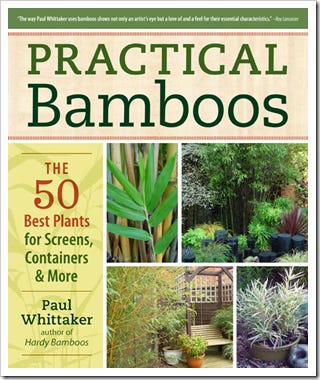
Best growing instructions
In our yard we’ve been nursing along some small clumps of bamboo, and since then I’ve been investigating other hardy bamboos. I own a lot of bamboo books, but Practical Bamboos is by far the most useful of all. Other bamboo books are more encyclopedic; this one focuses on “only” the 50 most useful bamboo species, spelling out what types are good for fence rows, which are drought resistant, which work well in containers, and how to identify those variants from lookalikes. There’s very specific growing tips for each variety and solid advice about the principles of growing bamboo plants in general. This is the manual to get. — KK
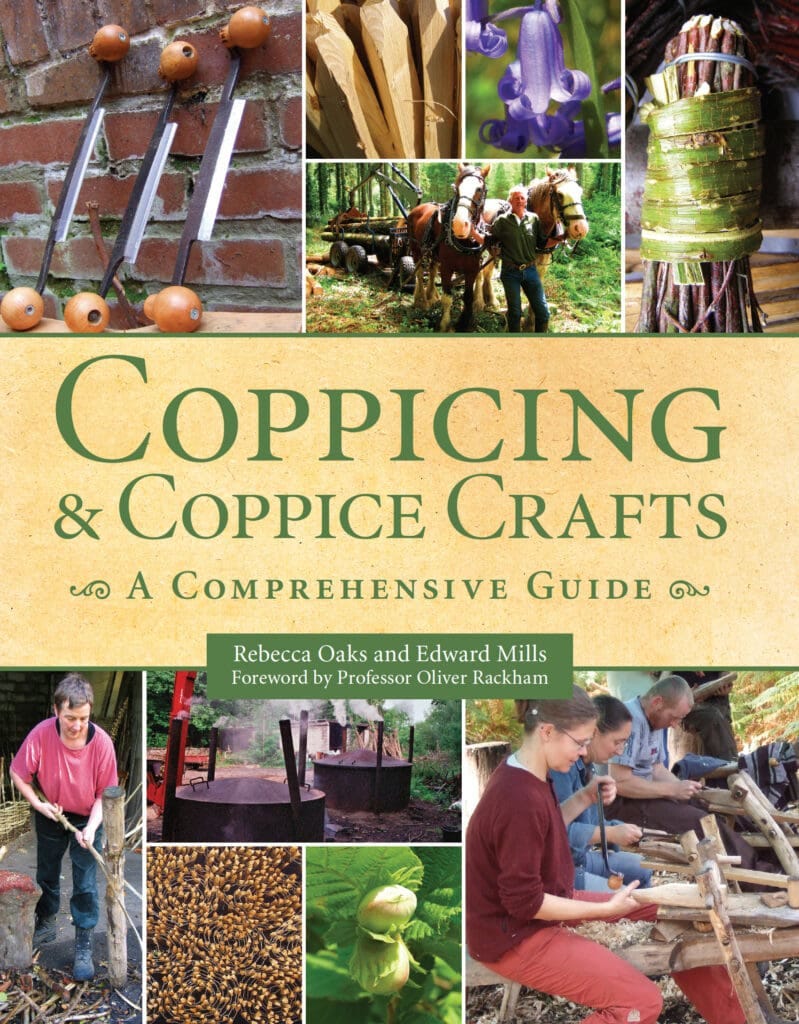
Sustainable wood harvests
Coppicing is an old art of the repeated harvesting of small-diameter wood from the same bush or tree. Once cut, the branches grow back, often pretty fast. Coppicing is common tradition around the world, particularly where big lumber is scarce. This book teaches the traditions and skills of coppicing as practiced in England. Coppicing is a useful art for homesteaders because you can sustainably extract wood products from a small lot or even fence row. Coppiced wood can be woven, used for carving, making chairs, charcoal, and for firewood. This English book is the best guide to the craft, instructing you in how to grow, manage, and use coppice bounty. One note, emphasized by the book: the biggest challenge in coppicing today is controlling deer, which were not a problem in old days (everyone ate them), but their huge populations now devour coppice shoots indiscriminately. — KK
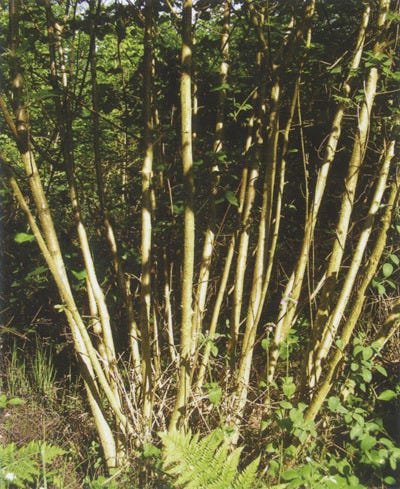
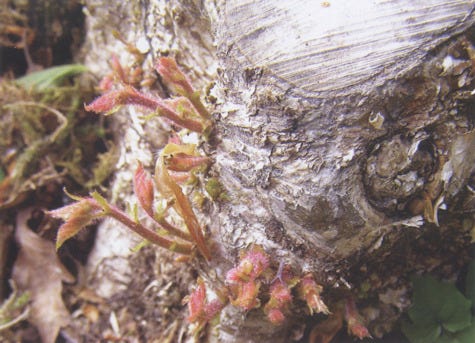
Coppicing makes use of a mysterious property that most trees have: when cut down they do not die but grow again from the stump or roots. People have used this behavior for at least 6,000 years to generate renewable supple of wood for fuel or to use for many crafts, simple or specialized.
Tips on dealing with brash
If there is a lot of waste, burn brash on fires raised off the ground, or on
areas of little value such as rhododendron stumps.
If there is not much waste, scatter it around and it will rot away very
quickly.
Make brash piles but keep them small and dense.
Consider chipping but remove the chips and compost elsewhere.
Making dead-hedging keeps brash relatively tidy and in one place, and
helps to deter deer if tall enough (a dead hedge is really just a tidy wind-row).
Using bamboo
Bamboo works. Bamboo does more things than any other material. Many of its traditional uses are inventoried here. A shape-shifter, bamboo’s super-human abilities are amazing. Its grass fiber is all that plastic would like to be, plus more. This is an encyclopedia of bamboo ideas. — KK
Arundinaria gigantic: 30 feet by 1 1/4 inch, - 10°F
(Arundinaria macrosperma).
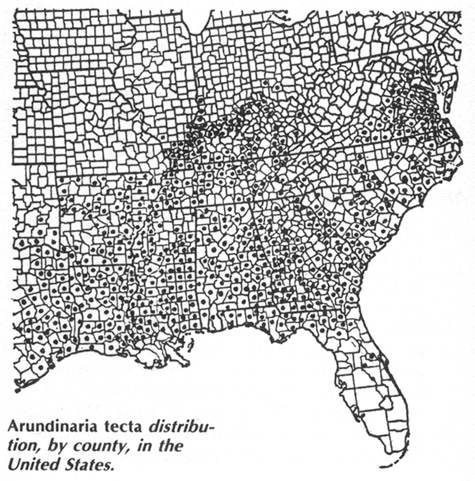
One of two bamboos native to the continental United States, its "canebrakes" once covered large areas from Virginia to Texas and provided an effective exist from the South for runaway slaves headed north for freedom before the Civil War.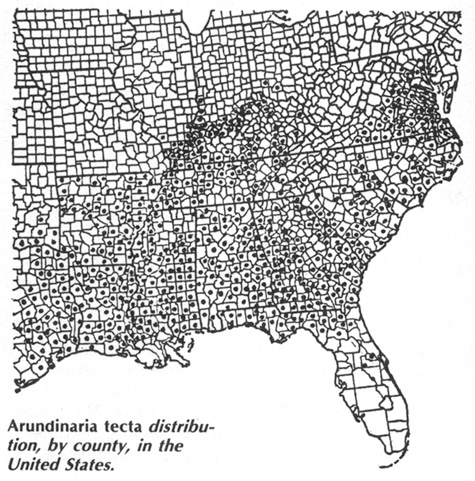
We live surrounded by such an abundance of tools that the advantage of a material that requires few tools, and those hand powered and even handmade in many cases, is not so apparent in industrial centers as in the hinterlands where bamboo is most abundant.
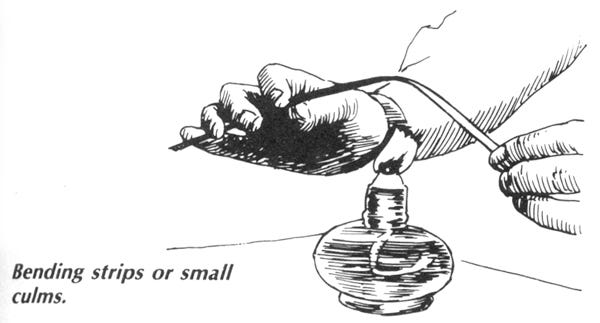
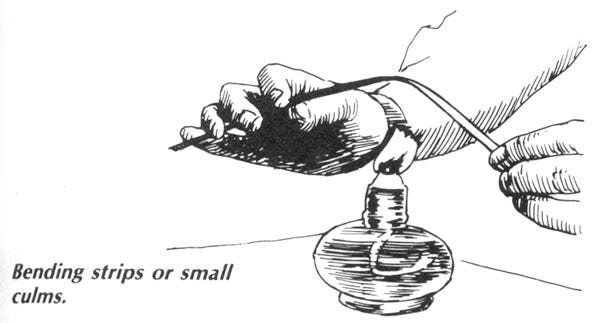
Bamboo’s high silica content is famous for dulling tools. Tool effectiveness will be increased, time spent sharpening reduced, and work in general cheered by using molybdenum steel or an equally hard alloy. Many a bamboo house has been machete built, but more tools are demanded for more refined work, some peculiar to processing bamboo and therefore unavailable at standard tool sources. The Chinese bamboo tub and bucket maker requires some thirty different tools and gadgets to measure, cut, fit, and assemble his wares.For kites or other miniworks, soak the pieces to be bent overnight in water with a dash of ammonia, then tie in desired shape around a mold to dry. You can heat small pieces in a candle flame. The mortar holding the fibers in place becomes flexible with heat and permits bending to chosen shape, which is retained after cooling. Take care not to scorch or burn bamboo by leaving candle too long in one position. Try using a bucket of hot sand to shape small pieces, as eyeglass doctors do to shape plastic frames. Don't force the bamboo's pace, nor try to bend it too far, or you' ll crack it.
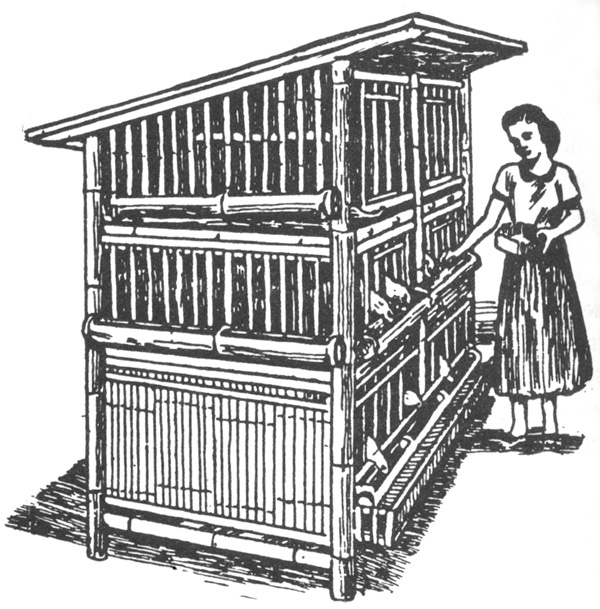
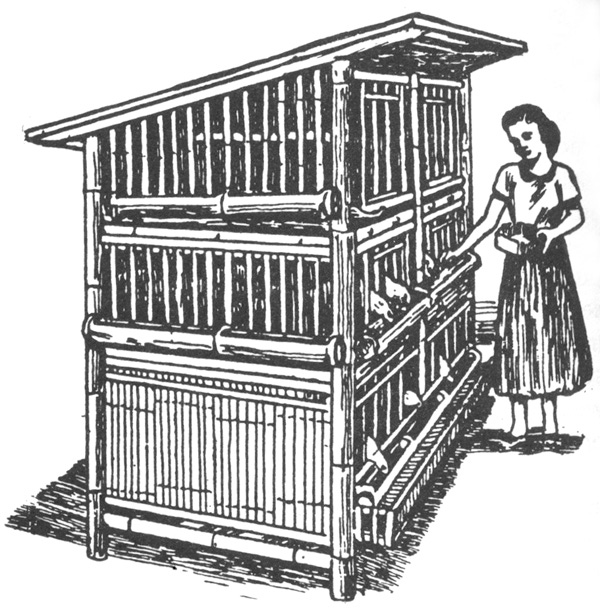
Bamboo animal cages and feeding troughs reduce expensive importation of metal cages, are more amiable to the cages, and can be repaired from locally available material.