
Book Making
Tools for Possibilities: issue no. 190
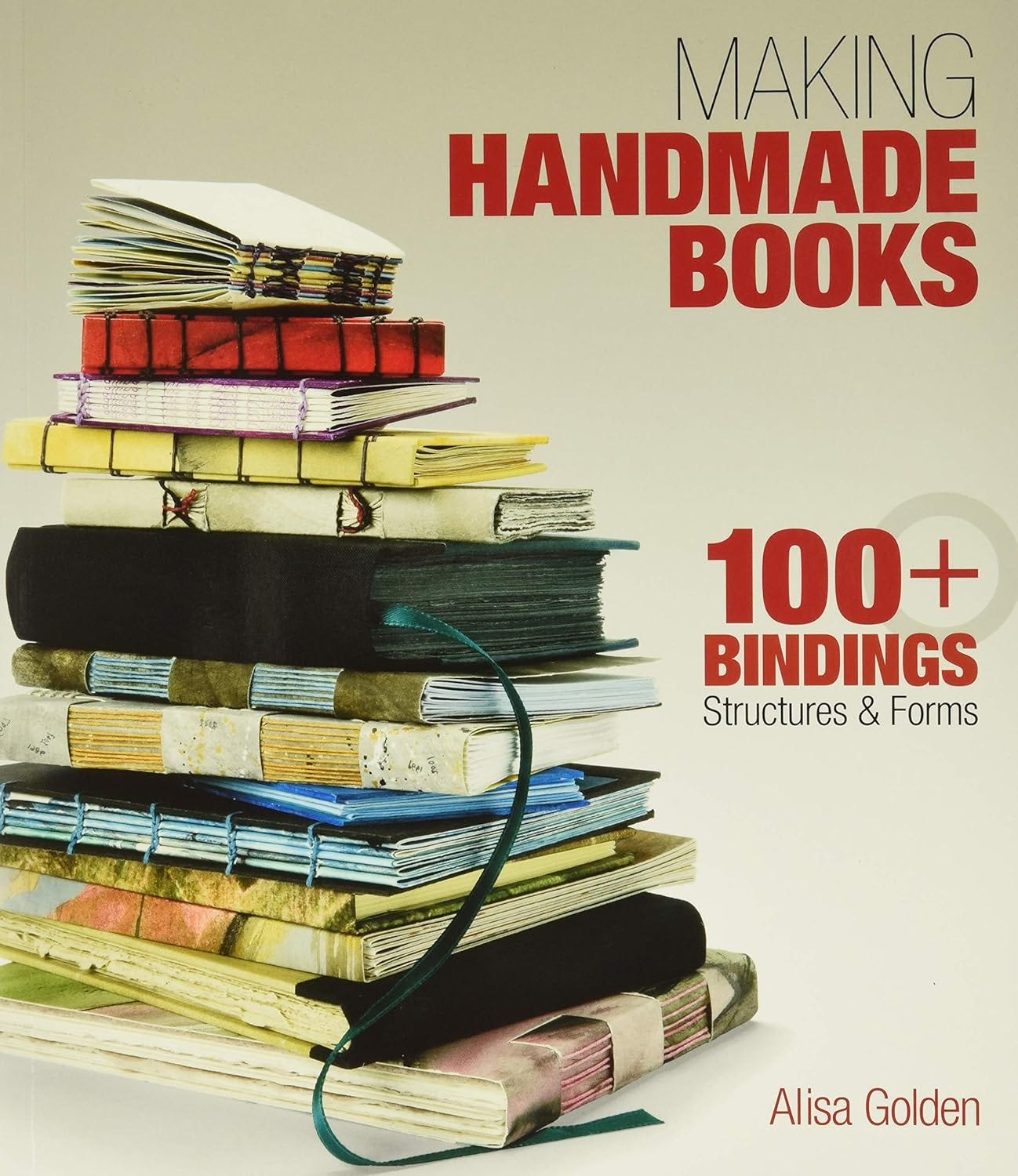
Best bookmaking guide
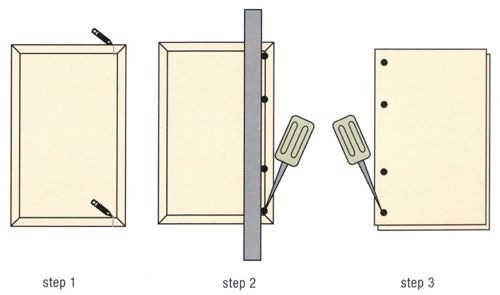
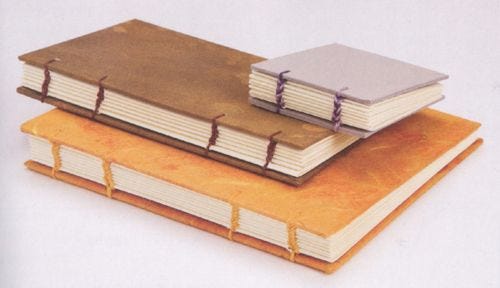
While traditional paper-book publishing declines, personal paper-book making ascends. Books have gone from industrial commodity to precious hand-made artifact. There’s a renaissance of handcrafted book-making by enthusiasts and Alisa Golden has played a key role in documenting and teaching this makers’ art. I have a number of book-making books, and this one by her is by far the most complete and thorough. Her diagrams and instructions are very clear. This hefty how-to manual gives directions for creating over 100 different types of books, book bindings and book-ish things. It incorporates her previous two how-to manual, adds new material and will guide anyone through the process of making a paper book by hand. Even better, it will prompt you to experiment with your own book-making designs. — KK
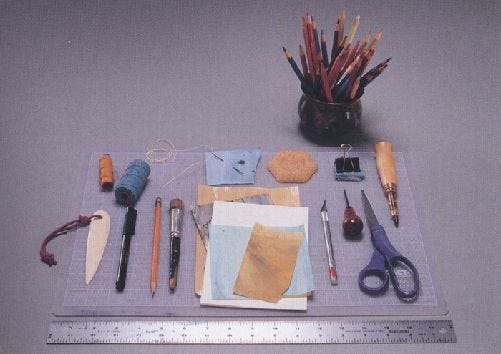
Top: Watercolor pencils
Second row: Colored waxed linen, natural linen thread and bookbinding needle, beeswax, binder clip, Japanese screw punch
Third row: Bone folder, archival superfine black pen, pencil, stencil brush, assorted papers, craft knife, awl, scissors
Bottom: Metal ruler; cutting mat under all
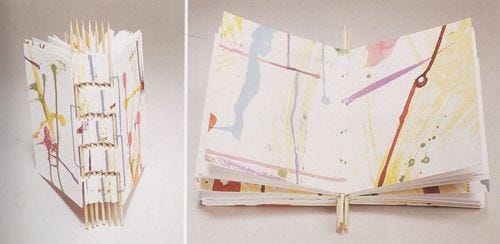
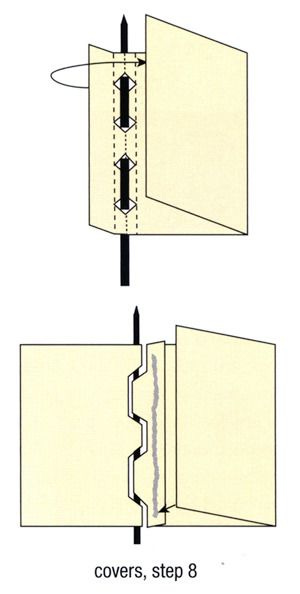
Staple-free stapling
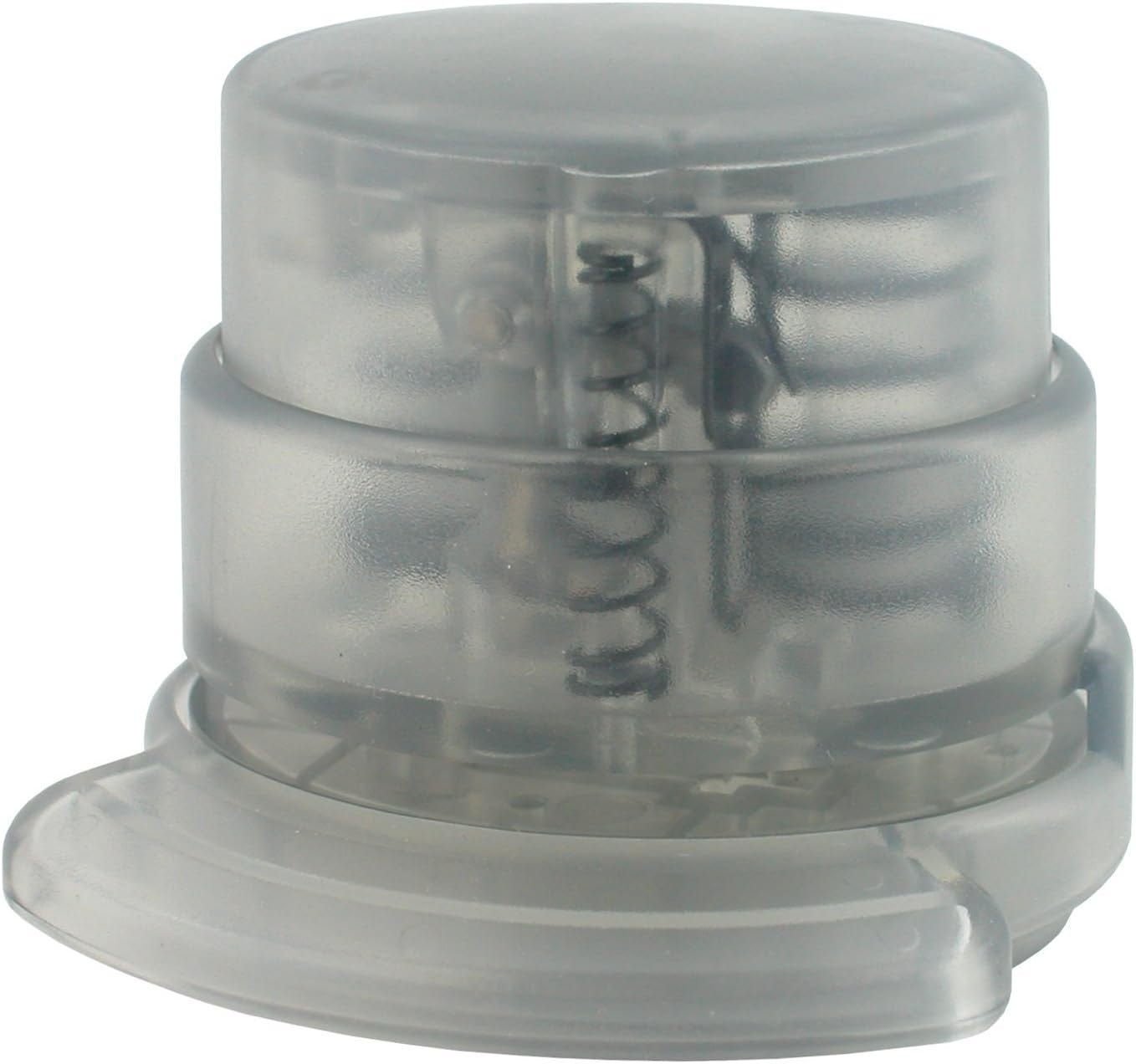
During a trip to Germany almost 20 years ago, I came across one of those slap-of-the-head clever items in an office supply store that I use to this day. When I bought this I was so enamored with it that I actually picked up a second one, thinking that eventually it would wear out and that it would be difficult to find a replacement. Turns out that I was happily wrong on both counts; the extra one that I bought is still in its original plastic display box and a slightly different version (photo below) is widely available. The PaperFix that I’ve owned for all these years is silent in use, completely ecological, and the ongoing cost is zero. I reach for it at least a few times a day and with one firm press of the top can bind about 6 to 8 pages (depending on paper thickness) together.
I find magazines too bulky to carry around when there are only a few articles in them that I actually want to read. Through years of traveling and learning to eliminate weight and waste, I now tear out articles I’m interested in and put them all in a folder labeled “Reading” that goes everywhere with me, and use my Paperfix to bind each individual article.
I prefer the PaperFix over paper clips or binder clips for a number of reasons, the first of which is space saving. If you have ever had 15 paper-clipped articles in a folder and seen how they expand the girth of that folder, you’ll know what I mean. Paper clips and binders have to be put somewhere when they’re removed. Clips of all varieties fall off and have a nasty habit of inserting themselves into every conceivable crack in cars, briefcases and desk drawers.
Once a page is removed from the bound bundle (unlike with a paper clip) it can’t be reinserted, nor can you pull out sheets from the midst of the bundle without disrupting the binding of the bundle. While the PaperFix doesn’t do everything a stapler can (particularly with thicker stacks of paper), for the vast majority of quick binding jobs it’s as good as a stapler, and takes up about a third the room on a desktop or in a drawer. It’s less expensive and uses nothing other than a press on the top to get its job done. — Scott Goldman
Heavy-duty saddle stapling
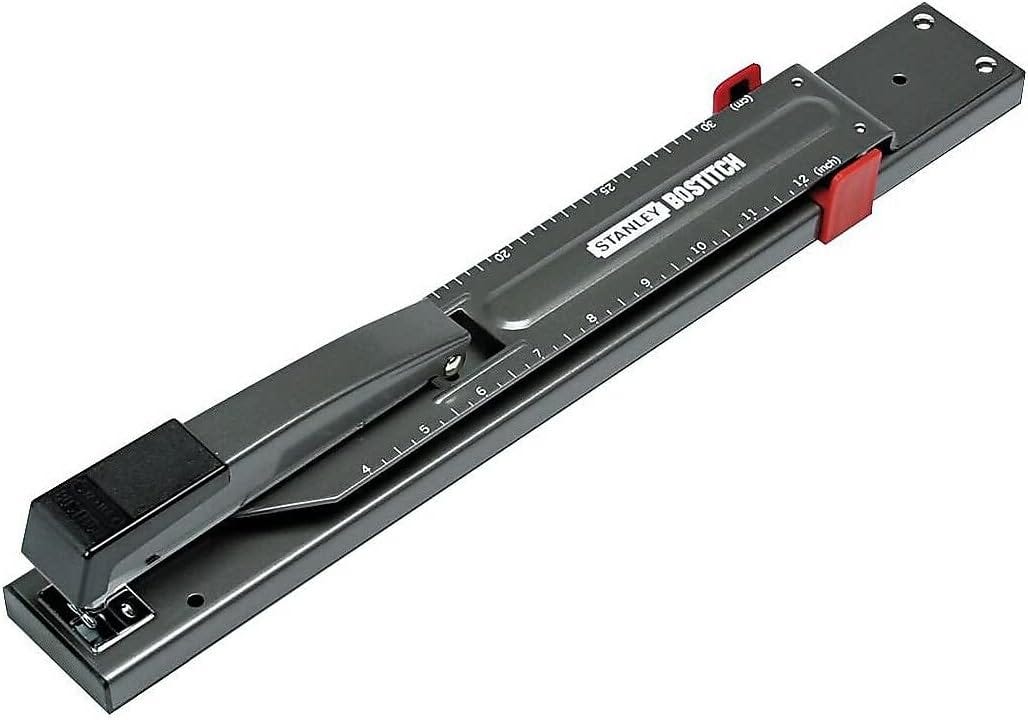
My theater group always uses these for stapling our programs together. It’s a serious workhorse, big and heavy, and the longer reach will allow you to make booklets out of much, much bigger material than the Mini Booklet Stapler. The stapler has a 12″ reach on it, so you can staple anything up to 24″ wide pre-fold (so architectural ‘D’-sized paper could be used, if you felt like it). And unlike the mini model, it takes standard staples. The staplers we use were old when I got involved with this theater group (about 7 or 8 years ago), and they’re still working like brand new. They are made almost entirely out of steel and are incredibly durable. We mostly use them for programs of no more than 6 sheets of standard paper and a heavy high-gloss cover sheet, but we do several hundred of these programs in a batch every couple of months. We also use them for stapling short scripts, say, 20 pages (long scripts get the three-ring binder). There’s a neat little plastic clip on the stapler (which is nicely graduated) that lets you set the width, which makes lining up the fold on your booklets very convenient; you just push your material to the clip and staple. Great for big batches. — Andy Martin
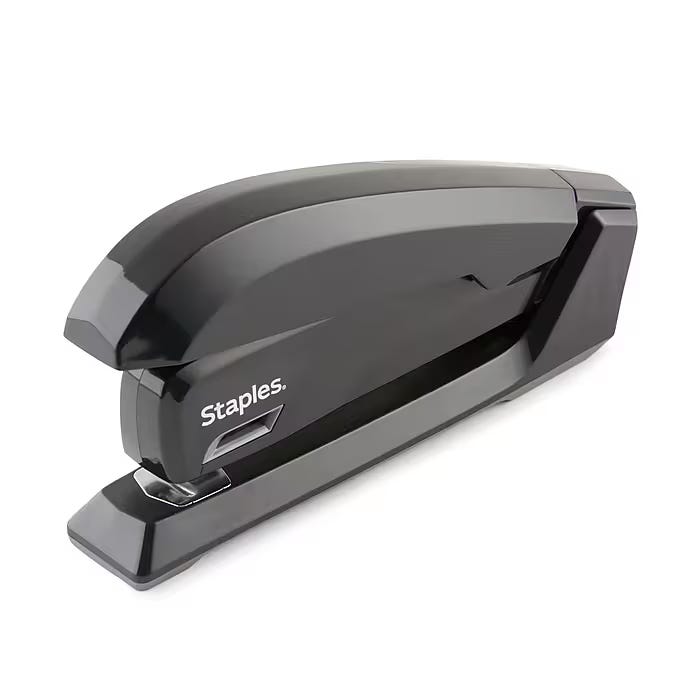
Best stapler
It remains a paper world. Should you ever need to buy a stapler, this is the one to get. By the Archimedean power of levers, one very light push on its head will effortlessly punch a staple through 20 or more sheets. Secures amazingly easily. All staplers should work like this. — KK