
Drawing
Tools for Possibilities: issue no. 186

Best drawing teacher
Drawing on the Right Side of the Brain
Now in its fourth revision, this remains the best guide for learning how to draw. I used it with my son, and his progress was remarkable. It has also helped my own drawing skills. I actually looked forward to the exercises which are brilliant and fun. In order to draw you must learn to see, and that’s what this book teaches: how to perceive. Because this perception training relies on strengthening right brain activity, it can be transferred to any kind of creative work. In each edition over the past 30 years, the author has widened the skills she is teaching, so that this current version will improve your perception skills — essential for any kind of innovation — whether or not you ever sketch. And still, it remains the best teacher for anyone — yes, anyone! — learning to how to draw. — KK
A caution: as all of our students discover, sooner or later, the left hemisphere is the Great Saboteur of endeavors in art. When you draw, it will be set aside--left out of the game. Therefore, it will find endless reasons for you not to draw: you need to go to the market, balance your checkbook, phone your mother, plan your vacation, or do that work you brought home from the office.
What is the strategy to combat that? The same strategy. Present your brain with a job that your left hemisphere will turn down. Copy an upside-down photograph, regard a negative space and draw it, or simply start drawing. Jogging, meditation, games, music, cooking, gardening--countless activities also produce a cognitive shift. The left hemisphere will drop out, again tricked out of its dominance. And oddly, given the great power and force of the left hemisphere, it can be tricked over and over with the same tricks.
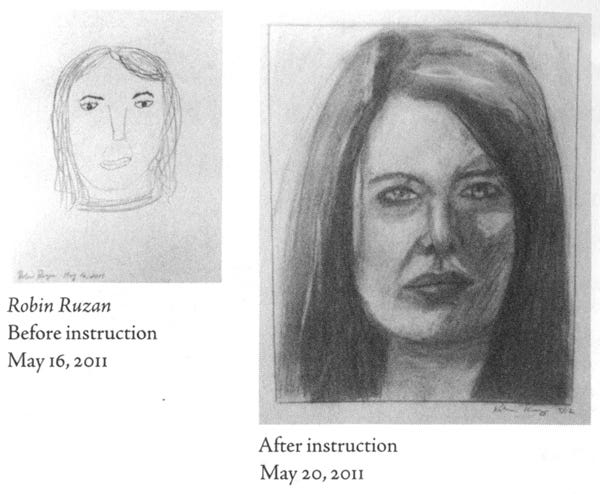
Drawing is a curious process, so intertwined with seeing the that the two can hardly be separated. The ability to draw depends on one’s ability to see the way an artist sees. This kind of seeing, for most people, requires teaching, because the artist’s way of seeing is very specific and very different from the ways we ordinarily use vision to navigate our lives.
Because of this unusual requirement, teaching someone to draw has some special problems. It is very much like teaching someone to ride a bicycle: both skills are difficult to explain in words.
Drawing as a learning, teachable skill
I firmly believe that given good instruction, drawing is a skill that can be learned by every normal person with average eyesight and average hand-eye coordination. Someone with sufficient ability, for example, to sign a receipt or to type out an e-mail or text message can learn to draw.
These pre-existing skills have nothing to do with potential to draw well. What the pre-instructions drawings represent is the age at which the person last drew, often coinciding with the age at which the person gave up trying to draw.
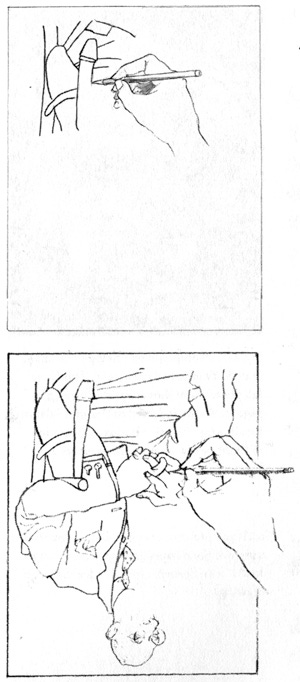
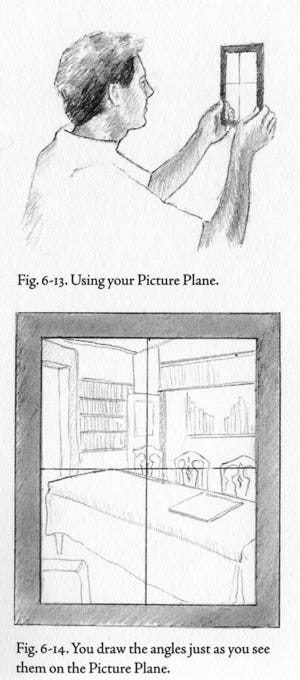
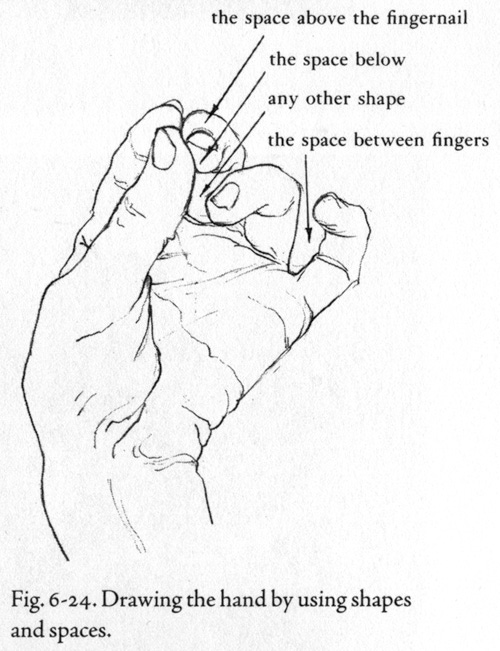
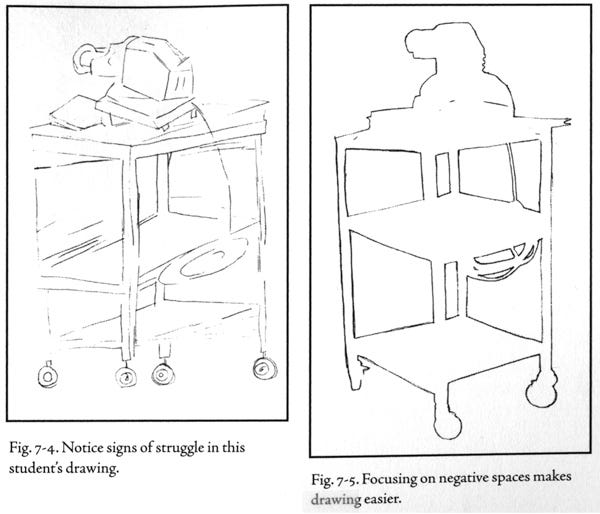
Ideally (in my view), learning in art should proceed as follows: the perception of edges (line) leads to the perception of shapes (negative spaces and positive shapes), drawn in correct proportion and perspective (sighting). These skills lead to the perception of values (light logic), which leads to the perception of colors as values, which leads to painting.
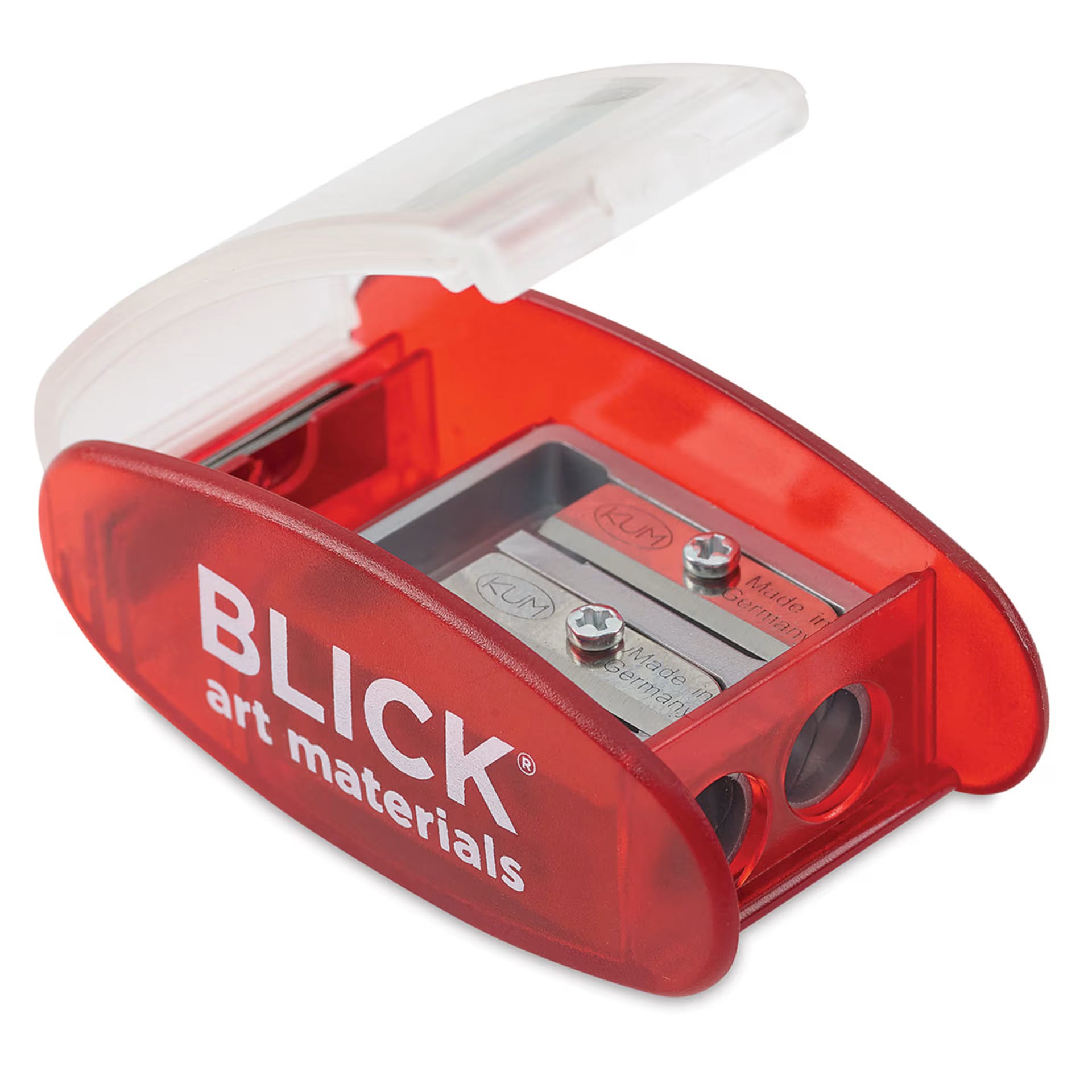
Dual pencil sharpener
Alvin KUM Long Point Pencil Sharpener
The iconic battery-powered Panasonic KP-4A, my previous favorite pencil sharpener, is no longer sold in the US. As it happens, I had been growing increasingly disenchanted by the noise and poor job the device sometimes provides. So I started researching to see what was out there in the manual small sharpener space. After ordering about six different models, I settled on the KUM Long Point Pencil Sharpener.
It’s different than other sharpeners in two respects. First, it has two holes: #1, labeled as such, trims the wooden barrel, and #2 hones the point. It also has an automatic brake built-in so you don’t waste time and lead after you’ve achieved a perfect point. Besides being silent and great fun to use, it produces a fantastically good point. There’s also a nice clear lift-up lid to easily empty shavings.
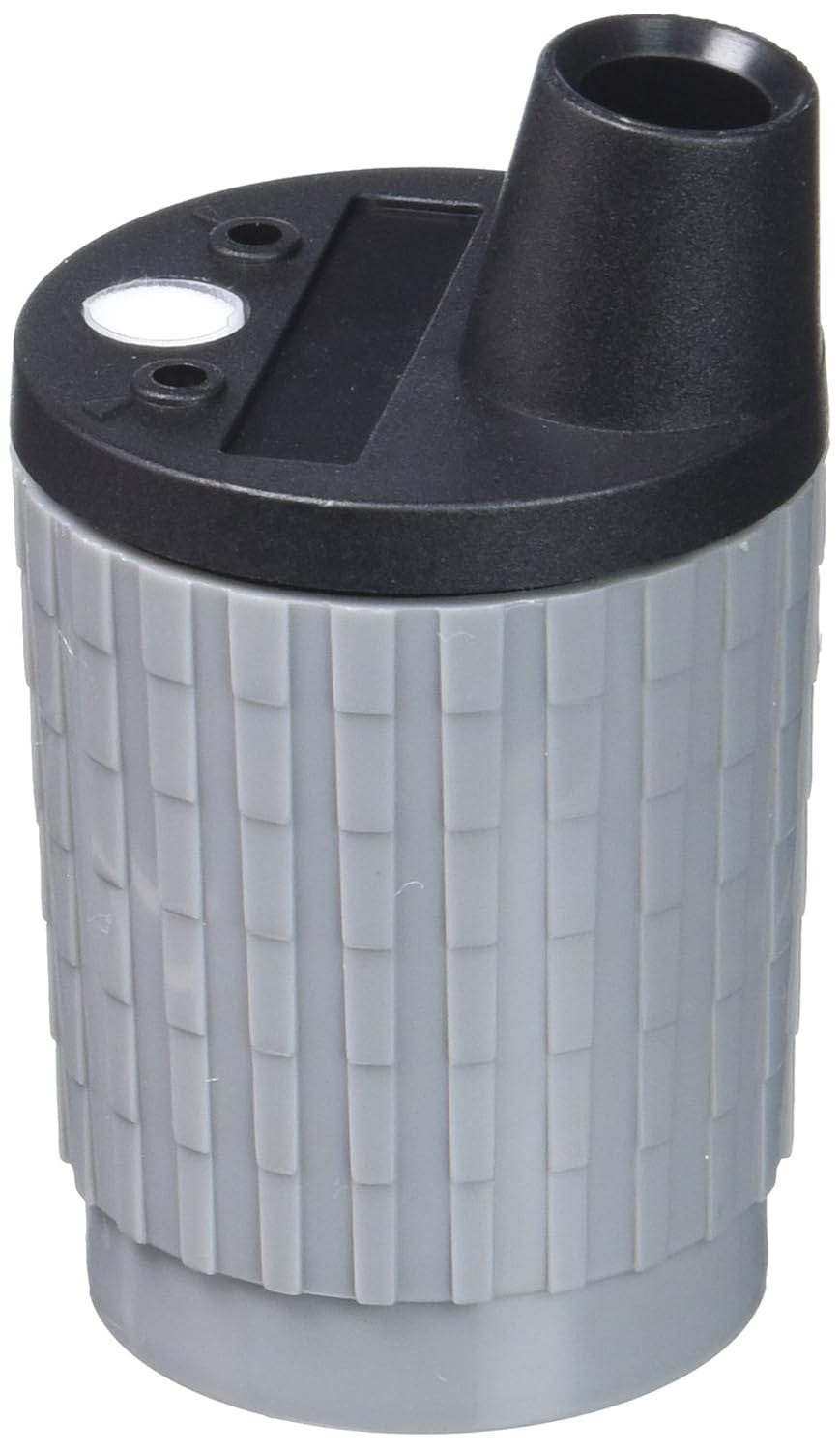
Superior pencil sharpener
the Alvin Lead Pointer is the best way to keep this type of pencil sharpened. I am an architect and use these pencils every day. I’ve had this sharpener for more than ten years and it still works like new. The pointer is small, making it ideal to hold in your hand while rotating your lead holder around the pointer. Because your two hands are working together, I find I have more control and there are much fewer broken leads. The cutting head is sharp and lasts for a long time. It only takes a couple spins and your lead is needle sharp. Maintenance and clean-up is a snap. Take the top off the body and dump the graphite shavings into your trash and you are done If you do break your lead in the pointer, just remove the top and tap it on the inside edge of your trash can to clear the broken pieces. Lead pointers can be messy because of the fine graphite dust, but my pointer has never leaked the dust onto my desk. I have used many different types of pointers from desk mounted to ones mounted on the top of an electric eraser. The desk mounted pointers tend to break leads easily, since you are moving your lead holder in a circular motion around a pointer fixed to your desk, thus you may move in a direction that is not compatible to the pointer and will snap your lead. The electric eraser type is good, but it does not stay sharp for very long. It’s also difficult to empty the graphite shavings and jams when you break your lead inside it. This pointer really is the best way to keep you lead sharp! If you work in an office, you may want to buy two — because it is so small and useful, your pointer just might grow legs. — Donald Moore, Jr.
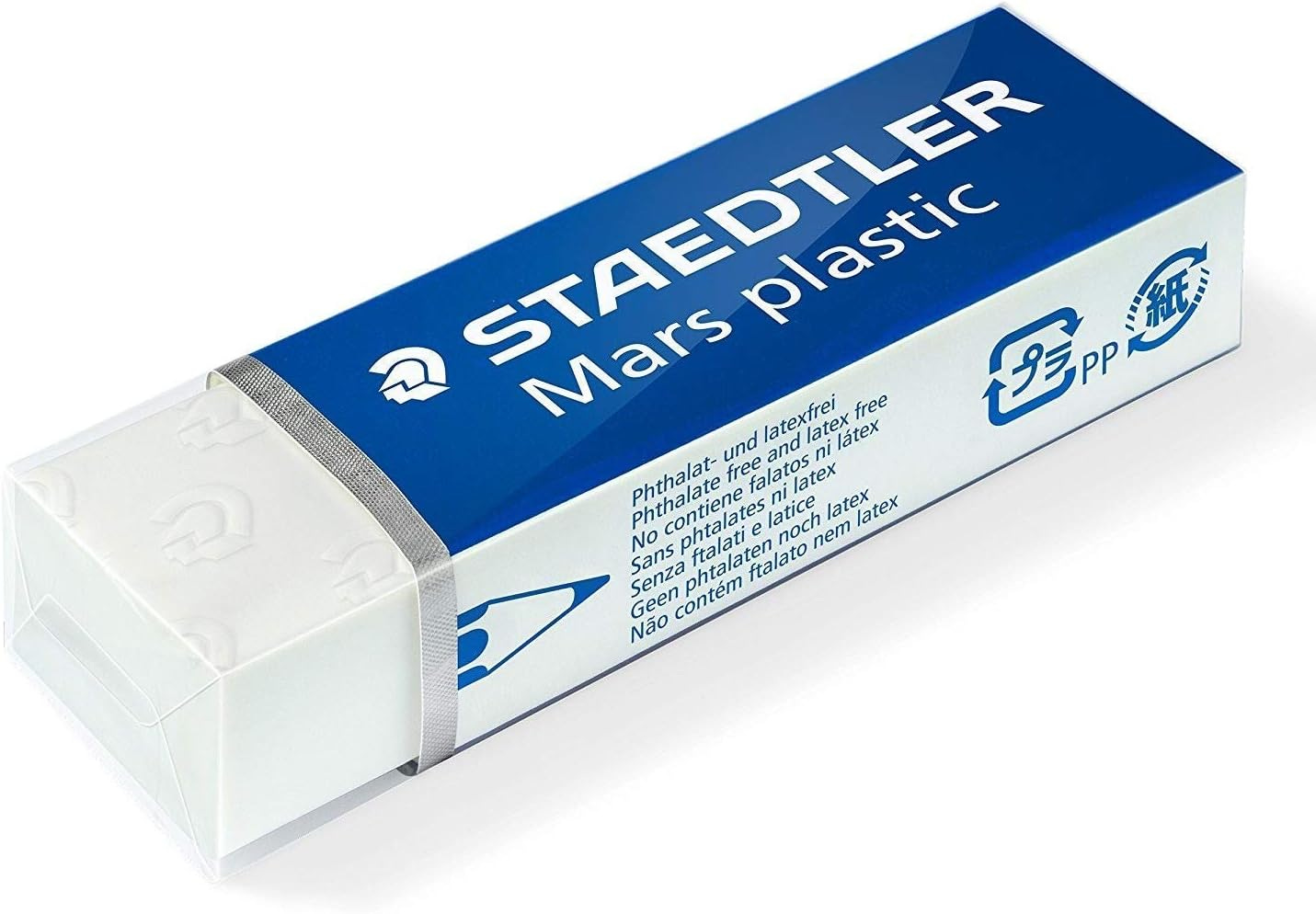
The best pencil eraser
Mars plastic erasers are the best. Abrasive erasers tear up the paper surface too much, and unless you have mastered pressing really hard without breaking the lead a mechanical pencil doesn’t draw that deep anyway.
The plastic erasers can also be cleaned with a wet thumb or a rub on scrap paper for neat work. I always find the “gritty” or “gummy” erasers get so dirty you spend half your time rubbing out their own mess. The Mars compound is stiff enough that corners can be used for fine work, or large areas erased with the flat end. The dirty, used portions just roll off as you use it and are cleanly blown/swiped away. I like the idea of putty/moldable erasers, but they get filthy, crumbly and horrible if kept in a pocket or bag. — Alan